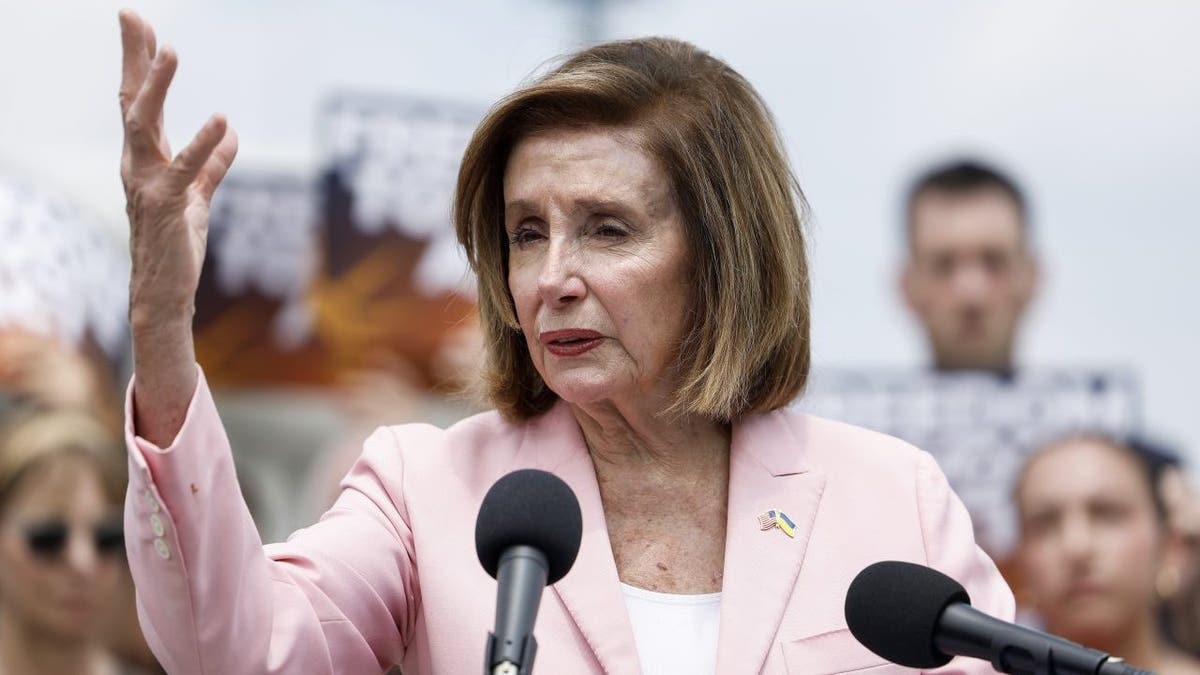
Rep. Nancy Pelosi Condemns Trump's Remarks About Harris: A Comprehensive Analysis
In a recent turn of events, Rep. Nancy Pelosi has openly criticized former President Donald Trump's remarks about Vice President Kamala Harris. As a leading figure in the Democratic Party, Pelosi's condemnation highlights the ongoing political tensions and the depth of her commitment to defending her colleagues against what she perceives as unwarranted attacks. Her criticism not only amplifies the discourse surrounding Trump's comments but also reinforces Pelosi's position as an advocate for respectful political dialogue.
Pelosi's response to Trump's remarks comes at a time when the political landscape is fraught with partisan divisions. The former President's statements about Harris have been viewed by many as an attempt to undermine her role and contributions as Vice President. Pelosi, recognizing the potential impact of such rhetoric, has taken a firm stance, emphasizing the need for unity and respect in political discourse. Her reaction underscores the importance of maintaining decorum and fostering constructive conversations in American politics.
As we delve deeper into this development, it is essential to explore the nuances of Pelosi's condemnation, the implications for the broader political climate, and the roles of both leaders in shaping the future of American governance. This article will provide a detailed examination of the context, reactions, and potential consequences of this political exchange, offering insights into the dynamics at play in this significant moment in U.S. politics.
- They Gently Wave Both Their Hands Awkwardly
- Mel Tiangco
- It Comes With Saturation And Concentration Meme
- Callie Thorne
Table of Contents
- Biography of Nancy Pelosi
- Personal Details and Bio Data
- Political Career of Nancy Pelosi
- Nancy Pelosi as Speaker of the House
- Donald Trump's Controversial Comments
- Kamala Harris: Role and Achievements
- Pelosi's Response to Trump
- Political Implications of Pelosi's Condemnation
- Public Reaction and Media Coverage
- Impact on the Democratic Party
- Bipartisan Relations in the US
- Future of Political Discourse
- Similar Incidents in Political History
- Frequently Asked Questions
- Conclusion
Biography of Nancy Pelosi
Nancy Pelosi, a stalwart of American politics, has been a pivotal figure in the Democratic Party for decades. Born on March 26, 1940, in Baltimore, Maryland, Pelosi's political journey began early, influenced by her family's involvement in politics. Her father, Thomas D'Alesandro Jr., was a U.S. Congressman and later the Mayor of Baltimore, instilling in her a deep understanding of public service.
Pelosi graduated from Trinity College in Washington, D.C., with a Bachelor of Arts in Political Science. Her early political career included internships and volunteer work, where she honed her skills and developed a keen insight into legislative processes. In 1987, her dedication and political acumen led her to win a special election to represent California's 5th congressional district, marking the beginning of her illustrious career in the House of Representatives.
Personal Details and Bio Data
| Full Name | Nancy Patricia Pelosi |
|---|---|
| Born | March 26, 1940 |
| Birthplace | Baltimore, Maryland, USA |
| Political Party | Democratic |
| Education | Trinity College, Washington, D.C. |
| Occupation | Politician |
| Position | Speaker of the House (2007-2011, 2019-2023) |
Political Career of Nancy Pelosi
Nancy Pelosi's political career is marked by her ascent through the ranks of the Democratic Party, culminating in her historic election as the first female Speaker of the House in 2007. Her career is characterized by a commitment to progressive policies, advocacy for human rights, and a strategic approach to legislative leadership.
Throughout her tenure, Pelosi has been a staunch advocate for healthcare reform, environmental protection, and social justice. Her leadership during the passage of the Affordable Care Act and her efforts to address climate change demonstrate her ability to navigate complex political landscapes and rally support for significant legislative initiatives.
Pelosi's tenure has not been without challenges. She has faced criticism and opposition from both sides of the political aisle, yet her resilience and strategic acumen have enabled her to maintain her position as a formidable force in American politics. Her ability to build consensus and her dedication to public service have solidified her legacy as one of the most influential political leaders in recent history.
Nancy Pelosi as Speaker of the House
Nancy Pelosi's tenure as Speaker of the House is marked by her ability to navigate the intricacies of legislative leadership while advocating for key Democratic priorities. As Speaker, Pelosi has played a crucial role in shaping the legislative agenda, guiding the passage of significant bills, and maintaining party unity amid various challenges.
During her first term as Speaker from 2007 to 2011, Pelosi was instrumental in passing landmark legislation, including the Affordable Care Act, aimed at expanding healthcare access to millions of Americans. Her leadership during this period was characterized by her ability to manage a diverse caucus and address pressing national issues.
Pelosi's return to the Speaker's chair in 2019 marked a new chapter in her political career. Despite facing a divided government, she continued to champion progressive causes, ensuring that issues such as climate change, healthcare, and social justice remained at the forefront of the legislative agenda. Her strategic leadership was crucial in navigating the complexities of impeachment proceedings against former President Donald Trump, demonstrating her commitment to upholding democratic principles and accountability.
Donald Trump's Controversial Comments
Former President Donald Trump's comments about Vice President Kamala Harris have sparked significant controversy and garnered widespread attention. Known for his provocative rhetoric, Trump's remarks are often seen as attempts to undermine political opponents and fuel partisan divisions.
In the case of Harris, Trump's comments have been criticized for their perceived disrespect and the implications they carry regarding gender and race. Such remarks not only target Harris as an individual but also resonate with broader societal issues, igniting debates about inclusivity and respect in political discourse.
Trump's controversial statements have elicited strong reactions from various political leaders, media outlets, and the public. The divisive nature of his rhetoric continues to shape the political landscape, influencing public perception and contributing to the polarized climate in American politics.
Kamala Harris: Role and Achievements
Vice President Kamala Harris has made history as the first female, first Black, and first South Asian Vice President of the United States. Her role in the Biden administration is pivotal, as she brings a wealth of experience and a unique perspective to the executive branch.
Before becoming Vice President, Harris served as a U.S. Senator from California, where she was known for her advocacy on issues such as criminal justice reform, healthcare access, and immigration policy. Her tenure in the Senate was marked by her ability to build coalitions and address complex national challenges.
As Vice President, Harris plays a critical role in supporting President Joe Biden's agenda, focusing on key areas such as economic recovery, healthcare, and foreign policy. Her achievements and leadership continue to inspire individuals around the world, breaking barriers and paving the way for future generations of leaders.
Pelosi's Response to Trump
Rep. Nancy Pelosi's condemnation of Trump's remarks about Kamala Harris reflects her commitment to defending her colleagues and upholding the principles of respectful political discourse. Her response underscores the importance of addressing and countering rhetoric that undermines the integrity and contributions of public officials.
In her response, Pelosi emphasized the need for unity and respect, calling for a focus on the substantive issues facing the nation rather than engaging in divisive and personal attacks. Her reaction highlights the broader implications of Trump's comments, drawing attention to the need for accountability and the promotion of constructive dialogue in American politics.
Pelosi's stance is a testament to her leadership and dedication to fostering a political environment grounded in mutual respect and collaboration. Her response serves as a reminder of the critical role leaders play in shaping the tone and direction of political discourse, advocating for a future characterized by inclusivity and understanding.
Political Implications of Pelosi's Condemnation
The political implications of Rep. Nancy Pelosi's condemnation of Trump's remarks about Kamala Harris are significant, reflecting broader themes of accountability, respect, and the dynamics of political leadership. Pelosi's response not only addresses the specific incident but also speaks to the ongoing challenges of navigating a polarized political landscape.
Pelosi's condemnation serves as a rallying point for Democratic leaders and supporters, reinforcing the importance of standing firm against rhetoric that seeks to undermine the credibility and contributions of public officials. Her response also highlights the need for leaders to prioritize substantive policy discussions over personal attacks, fostering an environment conducive to collaborative governance.
Additionally, Pelosi's reaction may influence bipartisan relations, as her call for respectful discourse resonates across party lines. By addressing the broader implications of Trump's remarks, Pelosi underscores the potential for political leaders to unite in promoting a more constructive and inclusive political climate, ultimately contributing to the strengthening of democratic institutions and processes.
Public Reaction and Media Coverage
The public reaction and media coverage of Rep. Nancy Pelosi's condemnation of Trump's remarks about Kamala Harris have been extensive, reflecting the widespread interest and concern surrounding the incident. Media outlets across the political spectrum have reported on the exchange, highlighting the broader societal and political implications of such rhetoric.
Public reactions have been varied, with many individuals expressing support for Pelosi's stance and her commitment to defending Harris against what they perceive as unwarranted attacks. Her response has resonated with those who advocate for respectful political discourse and the importance of addressing issues of gender and race in politics.
Conversely, some critics have questioned the motivations behind Pelosi's condemnation, suggesting that it may be politically motivated or an attempt to divert attention from other issues. Regardless of differing perspectives, the incident has sparked important conversations about the role of language in politics and the responsibilities of political leaders in shaping public discourse.
Impact on the Democratic Party
Rep. Nancy Pelosi's condemnation of Trump's remarks about Kamala Harris has significant implications for the Democratic Party, reinforcing its commitment to defending its leaders and advocating for respectful political discourse. Her response underscores the party's dedication to addressing issues of gender and race, promoting inclusivity and equality within the political sphere.
Pelosi's stance serves as a rallying point for Democratic leaders and supporters, emphasizing the importance of unity and collective action in addressing the challenges facing the nation. Her condemnation of Trump's remarks is a testament to the party's values and principles, reinforcing its commitment to fostering a political environment characterized by mutual respect and collaboration.
Additionally, Pelosi's response may influence the Democratic Party's strategy and messaging, highlighting the need to prioritize substantive policy discussions and address the broader societal issues raised by Trump's rhetoric. By taking a firm stance against divisive language, Pelosi and the Democratic Party aim to strengthen their position as advocates for progress and positive change in American politics.
Bipartisan Relations in the US
The dynamics between political parties in the United States have always been complex, and incidents such as Rep. Nancy Pelosi's condemnation of Trump's remarks about Kamala Harris underscore the challenges of maintaining constructive bipartisan relations. In an era marked by polarization and division, Pelosi's response highlights the importance of fostering dialogue and cooperation across party lines.
Pelosi's call for respectful political discourse resonates with many leaders and citizens who recognize the need for unity in addressing the nation's challenges. Her condemnation of divisive rhetoric serves as a reminder that political leaders have a responsibility to prioritize the collective good over partisan interests, promoting collaboration and understanding in the pursuit of common goals.
While the incident may initially exacerbate tensions between parties, it also presents an opportunity for leaders to come together in addressing the broader implications of such rhetoric. By emphasizing the importance of accountability and mutual respect, Pelosi's response may contribute to efforts aimed at strengthening democratic institutions and promoting a more inclusive and constructive political climate in the United States.
Future of Political Discourse
The future of political discourse in the United States is at a critical juncture, with incidents such as Rep. Nancy Pelosi's condemnation of Trump's remarks about Kamala Harris highlighting the need for a shift towards more respectful and constructive dialogue. As political leaders and citizens navigate an increasingly polarized landscape, the importance of fostering understanding and collaboration cannot be overstated.
Pelosi's response to Trump's remarks serves as a powerful call to action for political leaders to prioritize substantive discussions and address the underlying issues that contribute to division and discord. Her stance emphasizes the need for accountability and respect in political discourse, encouraging leaders to model behaviors that promote inclusivity and understanding.
The future of political discourse depends on the collective efforts of leaders and citizens to address the challenges facing the nation, prioritizing the common good over partisan interests. By championing respectful dialogue and collaboration, political leaders can pave the way for a more inclusive and constructive political climate, ultimately strengthening democratic institutions and processes.
Similar Incidents in Political History
Throughout history, political leaders have faced challenges related to rhetoric and discourse, with incidents similar to Rep. Nancy Pelosi's condemnation of Trump's remarks about Kamala Harris serving as reminders of the importance of respectful dialogue in politics. These incidents underscore the need for leaders to prioritize accountability and mutual respect in their interactions, fostering a political environment conducive to collaboration and progress.
Historical examples of divisive rhetoric and its impact on political discourse highlight the potential consequences of failing to address such language. In many cases, leaders who have taken a firm stance against divisive rhetoric have contributed to shifts in political culture, promoting a more inclusive and respectful environment for dialogue and debate.
By examining similar incidents in political history, leaders can draw valuable lessons on the importance of accountability and respect in political discourse. These lessons serve as guiding principles for fostering a political climate characterized by collaboration and understanding, ultimately contributing to the strengthening of democratic institutions and processes.
Frequently Asked Questions
What were Trump's remarks about Kamala Harris?
Trump's remarks about Kamala Harris have been criticized for their perceived disrespect and the implications they carry regarding gender and race. Such comments are seen as attempts to undermine her role and contributions as Vice President.
Why did Nancy Pelosi condemn Trump's remarks?
Nancy Pelosi condemned Trump's remarks to defend Kamala Harris and to emphasize the importance of respectful political discourse. Her response highlights the need for unity and respect in addressing the nation's challenges.
How have Pelosi's remarks impacted the Democratic Party?
Pelosi's condemnation of Trump's remarks has reinforced the Democratic Party's commitment to defending its leaders and advocating for respectful political discourse. It serves as a rallying point for unity and collective action within the party.
What are the broader implications of Trump's remarks?
Trump's remarks have broader implications for political discourse, highlighting issues of gender and race in politics. They contribute to the polarized climate and underscore the need for accountability and respect in political interactions.
How has the public reacted to Pelosi's condemnation?
The public reaction to Pelosi's condemnation has been varied, with many expressing support for her stance while others question her motivations. The incident has sparked important conversations about language and respect in politics.
What can be learned from similar incidents in political history?
Similar incidents in political history highlight the consequences of divisive rhetoric and the importance of addressing such language. Leaders who prioritize accountability and respect can contribute to a more inclusive and constructive political climate.
Conclusion
Rep. Nancy Pelosi's condemnation of Trump's remarks about Kamala Harris serves as a powerful reminder of the importance of respectful political discourse and the responsibilities of leaders in shaping public dialogue. Her response underscores the need for accountability and mutual respect, emphasizing the critical role leaders play in fostering a political environment characterized by inclusivity and understanding.
As the United States navigates an increasingly polarized political landscape, the collective efforts of leaders and citizens to prioritize substantive discussions and address the underlying issues of division are essential. By championing respectful dialogue and collaboration, political leaders can pave the way for a more inclusive and constructive political climate, ultimately strengthening democratic institutions and processes.
In conclusion, Pelosi's condemnation of Trump's remarks highlights the ongoing challenges and opportunities in American politics, serving as a call to action for leaders to prioritize the common good and promote a future characterized by respect, inclusivity, and progress.